The Evolution of Hip-Hop Journalism: Narrative Control, Platform Metrics, and the Battle for Cultural Authority

From The Source and XXL to DJ Akademiks and Scru Face Jean: Who controls the narrative when audiences become the media?
Hip-hop journalism has never been just about music. It has been about cultural ownership, credibility, community representation, and who gets to tell the story. For decades, magazines such as The Source, XXL, and Vibe influenced which artists received recognition, which albums became classics, and which voices were taken seriously. Today, that authority is distributed among journalists, independent creators, streaming personalities, podcast hosts, and millions of viewers who participate in the conversation.
The public disagreements involving DJ Akademiks and independent artist and commentator Scru Face Jean illustrate a larger question: When attention becomes the currency of digital media, does influence necessarily translate into credibility? Answering that question requires looking beyond personalities and examining the history, economics, and platform mechanics behind modern hip-hop journalism.
1. The Debate: Cultural Integrity Versus Digital Influence
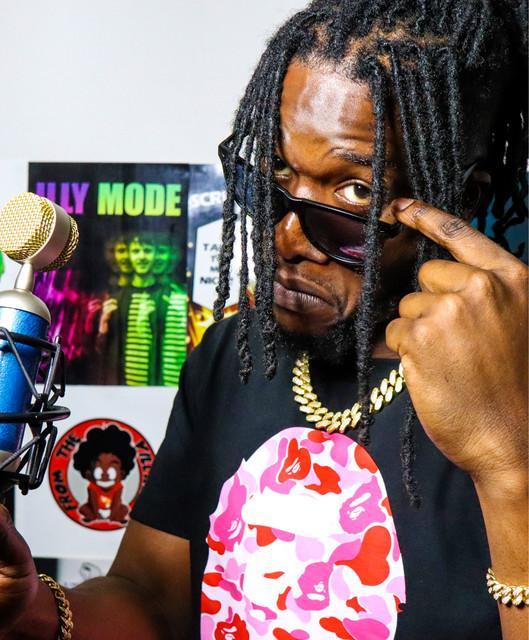
DJ Akademiks represents an influential model of contemporary hip-hop commentary: personality-driven coverage supported by social media distribution, livestreaming, interviews, and an audience built around ongoing cultural discussions. Scru Face Jean represents a different approach: an independent artist and commentator whose audience follows his music, reactions, criticism, and responses to industry controversies. Their disagreements reflect a recurring tension within hip-hop media over whether industry access creates authority, whether audience loyalty establishes credibility, and what responsibilities commentators have when their coverage involves actual people, neighborhoods, criminal allegations, or violence.
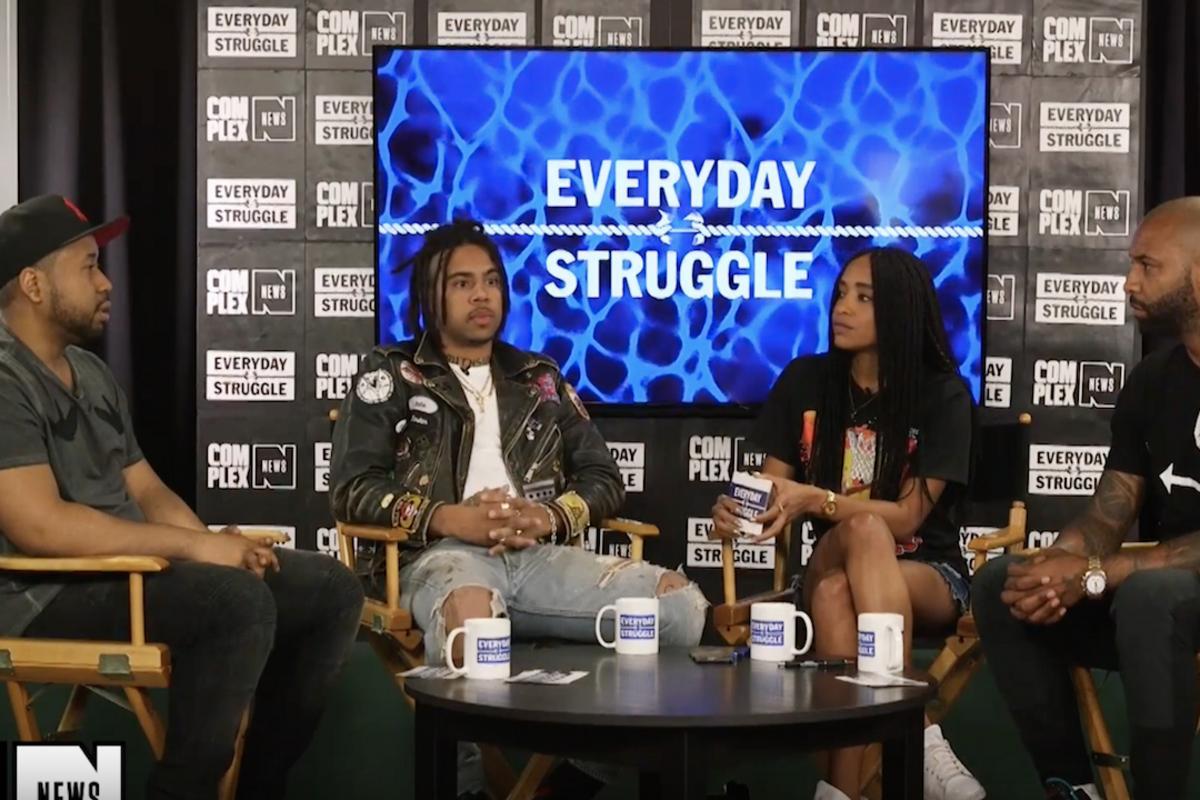
These questions are not new. In 2017, Chicago rapper Vic Mensa confronted Akademiks over his War in Chiraq series, criticizing the treatment of real-world violence as entertainment. Akademiks defended the series as an attempt to provide another perspective on Chicago's drill scene and its surrounding controversies. The exchange illustrates a persistent editorial dilemma: how to document events that audiences want to understand without exploiting or sensationalizing the people involved. That responsibility applies to traditional publications and independent commentators alike.

2. What the Platform Numbers Actually Tell Us
Subscriber counts provide evidence of accumulated reach, but they do not automatically establish active engagement, editorial credibility, revenue, or audience trust. Public YouTube statistics available on November 7, 2026, illustrate this distinction. Third-party tracking reports approximately 2.83 million subscribers and 1.408 billion lifetime channel views for DJ Akademiks, compared with approximately 1.5 million subscribers and 474 million lifetime views for Scru Face Jean. The tracked channels also differ in their publishing histories, with approximately 3,257 videos attributed to Akademiks and 5,572 to Scru Face Jean.
These numbers tell a more interesting story than a simple comparison of popularity. Akademiks maintains a larger accumulated YouTube audience and substantially more lifetime views on the channels examined, while Scru Face Jean has independently built a significant audience of his own. However, lifetime subscriber and view totals represent different stages of channel development and cannot establish which creator currently commands greater attention across the broader media ecosystem. A creator's YouTube statistics may exclude meaningful activity on Twitch, Instagram, podcasts, livestreams, and other distribution platforms.
The distinction between accumulated reach and active engagement is particularly important when evaluating commentary channels. A video receiving 100,000 views on a channel with one million subscribers may represent meaningful audience participation, but that figure alone cannot establish a stronger relationship with viewers than another channel receiving similar engagement. Upload frequency, content format, recommendation algorithms, returning viewers, and the age of a creator's subscriber base all influence performance. Even substantial engagement may reflect disagreement or controversy rather than loyalty. The meaningful distinction is between accumulated reach, current attention, and demonstrated trust. Those are three different things, and none should be substituted for the others.
3. The Print Era: When Editorial Recognition Shaped Careers
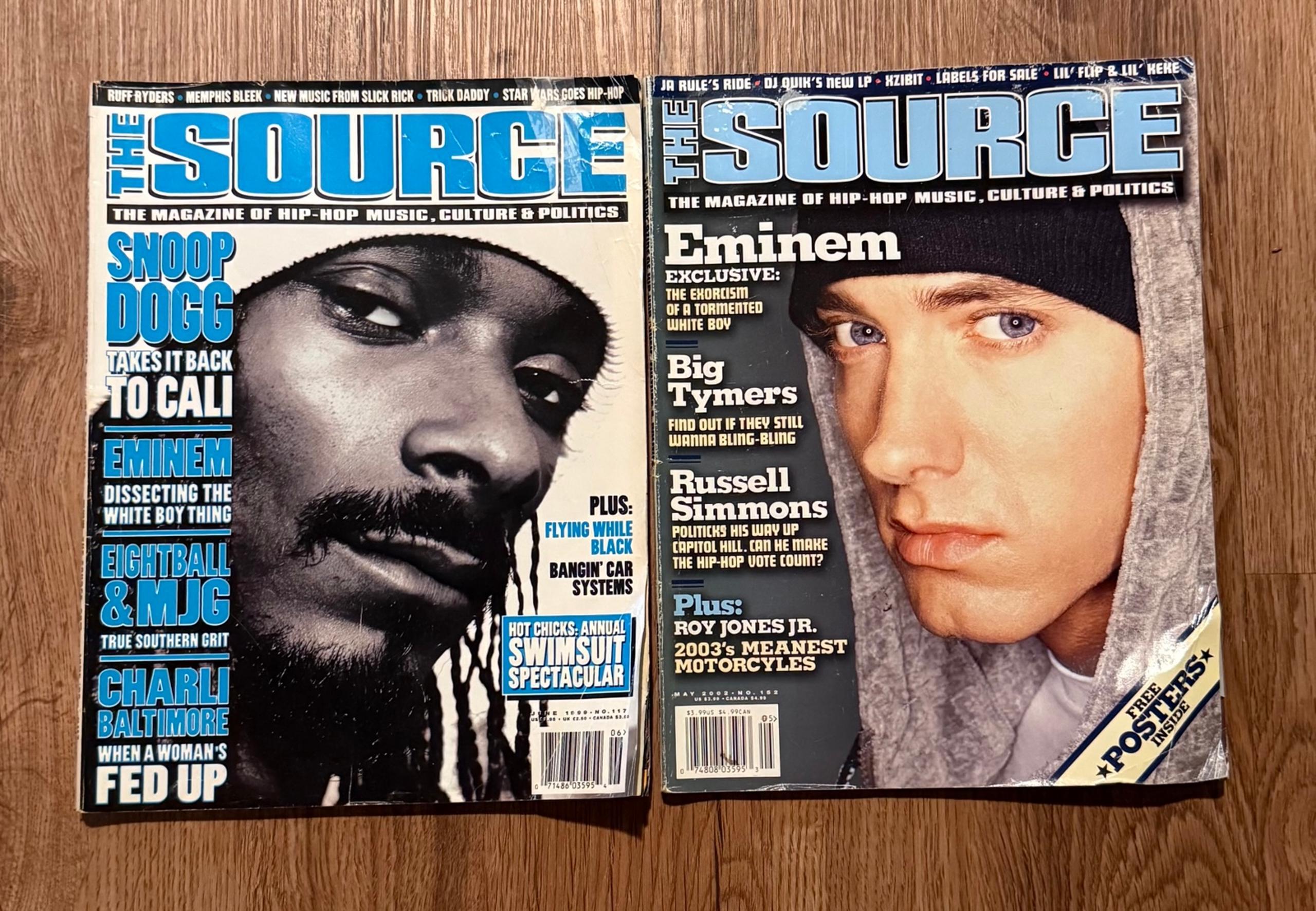
During the 1990s and early 2000s, hip-hop publications played an important role in documenting and interpreting the culture. The Source, founded in 1988, became particularly influential through album criticism, interviews, and artist discovery. Its Unsigned Hype column featured emerging artists, including The Notorious B.I.G. and Eminem, before their major commercial breakthroughs, while the magazine's five-mic rating system became a widely recognized symbol of artistic achievement. Publications such as Vibe and XXL similarly helped establish hip-hop as a subject worthy of serious journalism, photography, criticism, and historical documentation.
Editorial teams could investigate stories, commission criticism, verify information, and preserve cultural history through carefully produced publications. However, this model also had limitations. Editors, advertisers, publicists, and record labels influenced access and visibility, while print deadlines restricted publication speed. Independent artists often faced substantial barriers to recognition, and traditional publications were not immune to commercial pressure, editorial disputes, or questions about conflicts of interest. Nevertheless, this period established an enduring principle: hip-hop deserved journalism that treated its artists, audiences, and communities as culturally significant.
4. The Blog Era: When Audiences Challenged the Gatekeepers
The expansion of the internet transformed the relationship between artists, journalists, and audiences. During the mid-2000s and 2010s, platforms such as NahRight, 2DopeBoyz, OnSMASH, DJBooth, WorldStarHipHop, and other independent outlets offered alternatives to established publications. Artists could circulate music directly, bloggers could introduce unfamiliar performers without waiting for major-label approval, and listeners could discover mixtapes, interviews, and commentary through online communities. The speed of publication accelerated dramatically, with music and cultural developments moving through websites and social networks long before traditional magazines could respond.
This transition did not eliminate gatekeeping; it created new gatekeepers. An influential blogger, website, or video platform could become as important to an emerging artist as a traditional editorial feature. The economics also changed as traffic, digital advertising, search visibility, and shareability became central to publishing. A provocative headline could generate substantial revenue, while a viral controversy could outperform a carefully researched feature. The distinction between material serving the public interest and content primarily designed to attract attention became increasingly important, laying the foundation for today's creator-driven media environment.

5. The Streamer Era: When the Conversation Becomes the Product
Today's creator-led environment has extended that transformation further. On YouTube, Twitch, and podcast platforms, the reporting process itself frequently becomes entertainment. Audiences watch commentators encounter information, interpret it, disagree with one another, and react to developments as they happen. Rather than presenting a finished article after research and editorial review, a streamer may spend hours discussing emerging stories while engaging directly with viewers. The traditional publication cycle has been replaced, in many settings, by continuous commentary in which the process of developing an opinion becomes part of the product.
This model creates meaningful advantages. Independent voices can reach audiences without institutional permission, challenge influential figures, question established narratives, and receive immediate feedback. It also introduces substantial risks. A livestream can circulate allegations before verification is complete, a short reaction clip can remove essential context, and recommendation systems may reward emotional intensity more readily than careful qualification. Commercial incentives can turn personal disagreements into recurring content franchises, particularly when controversy reliably generates views, subscriptions, donations, and additional exposure.
Not every streamer operates this way, just as not every traditional publication consistently meets its editorial responsibilities. The essential distinction is not between professional journalists and independent creators but between responsible communication and attention without accountability. Independent publishing removes some institutional barriers, but it does not remove the obligation to distinguish established facts from speculation, acknowledge uncertainty, and consider the consequences of reporting.
6. The Economics of Attention: Reach Is Not the Same as Trust
The contemporary hip-hop media business operates through several interconnected forms of value: reach, engagement, credibility, independence, and accountability. Reach measures how many people might encounter a creator's work, while engagement concerns how actively audiences watch, respond, share, and return. Credibility depends on the reliability of information and the willingness to separate evidence from opinion. Independence concerns a creator's freedom to criticize influential institutions or individuals without allowing commercial relationships to dictate the conclusion. Accountability requires correcting errors, identifying sources where appropriate, and giving people reasonable opportunities to respond to significant allegations.
These measures are related, but they are not interchangeable. A large audience does not guarantee accurate reporting, and an independent platform does not automatically guarantee ethical conduct. Strong engagement does not necessarily indicate agreement or confidence in a creator's conclusions; audiences may participate because they disagree, are curious, or enjoy watching conflict. Similarly, access to prominent artists and industry figures may improve a commentator's ability to obtain information without establishing whether that information has been adequately verified.
For this reason, the Akademiks–Scru Face Jean discussion should not be reduced to a contest over which creator has more subscribers or whose response receives more views. The more important question is what standards audiences should expect from anyone who claims the authority to explain hip-hop culture. A creator who consistently documents sources, acknowledges uncertainty, and corrects mistakes may demonstrate editorial reliability regardless of platform size. Conversely, popularity alone should not exempt any commentator from scrutiny.
7. Cultural Authority Has Changed Hands, but Not Disappeared
Hip-hop media has moved through several overlapping systems of authority. During the print era, editorial selection, criticism, interviews, and physical distribution shaped cultural visibility. The blog era expanded opportunities through independent discovery, mixtape circulation, community participation, and online readership. The streaming era increasingly emphasizes personality, speed, direct audience relationships, and platform distribution. Each transformation has widened some forms of participation while establishing new mechanisms through which influence is accumulated and controlled.
The current environment is more accessible to independent voices, but access does not guarantee equitable visibility. Recommendation algorithms, monetization policies, ownership structures, sponsorships, and platform moderation continue to shape what audiences encounter. Where editors once determined which stories deserved space in a magazine, automated recommendations and audience engagement now help determine which narratives dominate digital conversation. This shift creates opportunities for cultural participation while introducing new dependencies on private technology companies whose distribution decisions are not always transparent.
Gatekeeping, therefore, has not disappeared. It has changed form. Understanding modern cultural authority requires examining not only individual commentators but also the technological and commercial infrastructure that amplifies their work.
8. The Responsibility of Independent Hip-Hop Media
Hip-hop's history demonstrates why the distinction between journalism and commentary matters. The culture has repeatedly served as a means of documenting conditions that established institutions overlooked, misunderstood, or misrepresented. Its journalists, artists, photographers, DJs, and community historians have preserved accounts of neighborhoods, creative movements, social struggles, commercial exploitation, and artistic innovation. That history deserves more than a media environment in which the loudest reaction automatically becomes the accepted narrative.
Independent creators have an opportunity to improve this environment precisely because they are not required to reproduce every convention of traditional publishing. They can investigate neglected subjects, introduce unfamiliar voices, and challenge established institutions. However, independence must be accompanied by responsibility. Credible cultural commentary should distinguish evidence from allegation, provide meaningful context, acknowledge uncertainty, correct mistakes, and recognize the consequences of public narratives. These principles are particularly important when discussions involve violence, criminal cases, private individuals, or communities historically represented through sensational coverage.
Audience participation can strengthen accountability by exposing errors, questioning incomplete reporting, and demanding greater transparency. It can also amplify misinformation when unverified allegations become entertainment. The outcome depends partly on what creators choose to publish and partly on what their audiences and distribution platforms reward. The future of independent hip-hop media will therefore be shaped not only by creative freedom but also by the standards communities establish around that freedom.

Conclusion: Who Gets to Tell Hip-Hop's Story?
The evolution of hip-hop journalism is not simply a story about magazines losing power to YouTubers. It reflects a changing relationship between cultural authority, technology, commercial incentives, and audience participation. DJ Akademiks demonstrates the scale that personality-driven media can accumulate, while Scru Face Jean demonstrates that independent artists and commentators can build substantial audiences and participate directly in debates that once depended heavily on institutional access. Neither audience size nor independence settles the question of credibility; that must be earned through the quality and accountability of the work.
The next evolution of hip-hop journalism should not require choosing between institutional editorial standards and independent cultural expression. It should combine the accessibility and immediacy of creator-led media with verification, historical understanding, accountability, and respect for the communities being covered. Hip-hop's cultural record is too important to be defined solely by algorithmic visibility or the commercial success of conflict. The future of its journalism will not be determined only by who controls the microphone, but also by who can be trusted with the story.
Sources and Further Reading
Platform statistics — November 7, 2026
DJ Akademiks, Social Blade:
https://socialblade.com/youtube/handle/djakademikstv2
Scru Face Jean, Social Blade:
https://socialblade.com/youtube/handle/scrufacejeanofficial
DJ Akademiks, third-party channel estimates:
https://trendreport.com/channels/stats/djakademikstv2/
Historical and cultural reporting
Pitchfork — How a Group of Journalists Turned Hip-Hop Into a Literary Movement
https://pitchfork.com/features/article/how-a-group-of-journalists-turned-hip-hop-into-a-literary-movement/
The Source — Introducing the 2015 Source360 Unsigned Hype Competition
https://thesource.com/2015/08/12/introducing-the-2015-source360-unsigned-hype-competition/
Chicagoist — Watch Vic Mensa Tear Into 'War In Chiraq' Creator For Sensationalizing Violence
https://www.chicagoist.com/2017/06/19/vic_mensa_unloads_on_dj_over_his_wa.php
Oxford Academic — How Hip Hop Became the Leading Music Genre in the Digital Streaming Era
https://academic.oup.com/book/58670/chapter/485384482
REVOLT — A Look Back at How Authenticity and Curation Ruled Hip Hop's Blog Era
https://www.revolt.tv/article/2022-06-17/174993/authenticity-and-curation-ruled-hip-hops-blog-era
#HipHopJournalism #MusicIndustry #DigitalMedia #MediaLiteracy #IndependentMedia #CreatorEconomy #CulturalCriticism